

3D printing, given the increasing social and economic impact, is considered in all respects, the third industrial revolution.
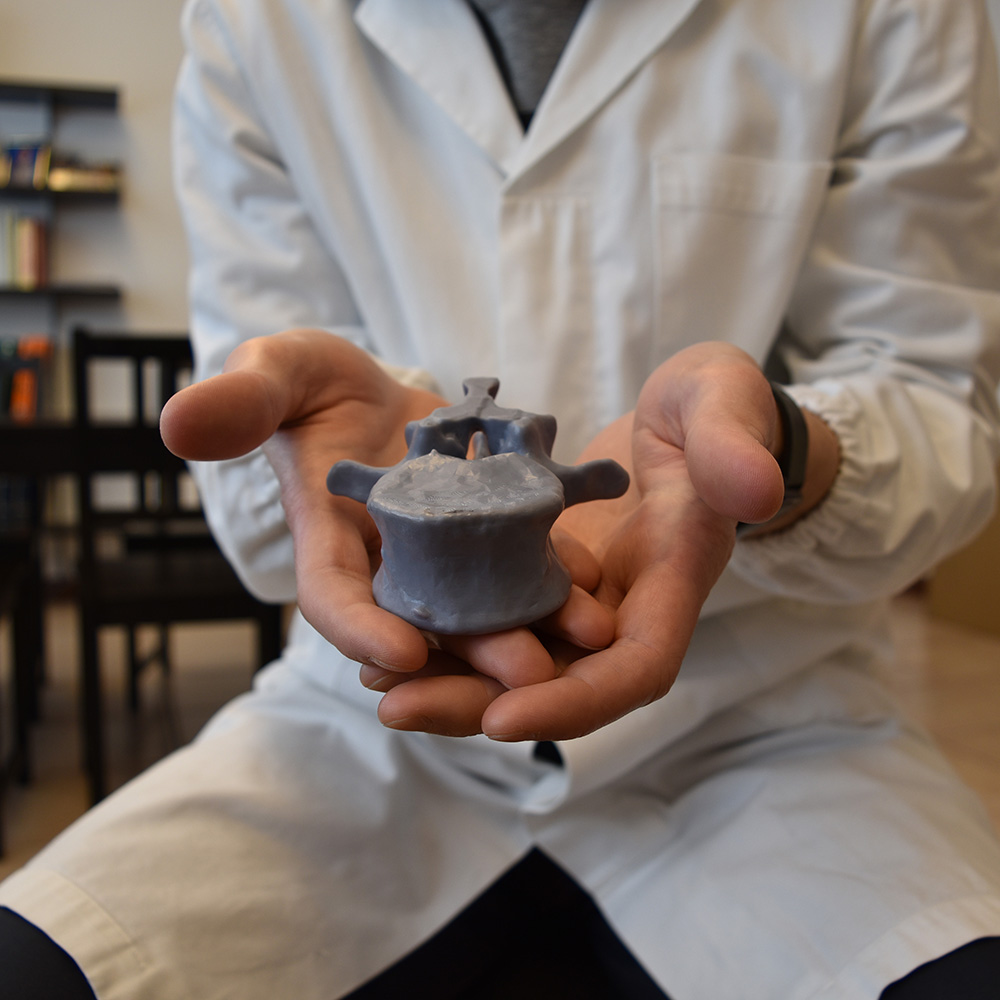
There are countless of 3D printing applications in the medical industry. Among the main there is the possibility of creating of patient-specific organ models in order to support surgeons in planning pre and intra surgical. This field of application, called rapid prototyping to surgical planning, provides insight into the anatomical relationships between the different structures and to carefully plan access and the operating space during operations.
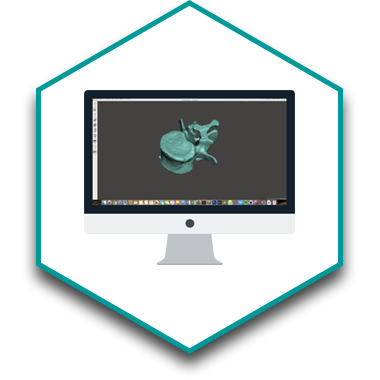
The workflow to get printing of anatomical models of generally from CT and MR images. The CT images are those with higher spatial resolution and, therefore, are more employed instead of the magnetic resonance images. The first process is image segmentation, in other words the cleaning from any noise and the detection/highlight the anatomical region to be printed.
After the segmentation process in which the image is still volumetric, it is necessary to extract the object surface and convert it in the form of composed mesh of interconnected triangles. It is essential to verify the quality of the mesh produced by use of special software.
Last step is, if necessary, the filling of the hollow parts.
The first studies on the benefits of 3D print in the health sector deal mainly the changes related to the operating room. The learning curve of medical personnel, as a learning time for new procedures, was estimated to fall by about 20%. The possibility of a surgical planning in fact improves the clinical outcome and the patient's recovery time.
In pre-operative phase may be rated the material to be used with advantage on the efficiency of procedures: reduction of material to be sterilized, decrease medical-legal disputes, reduction in operating room costs.
 Aeffe Medicale Srls